

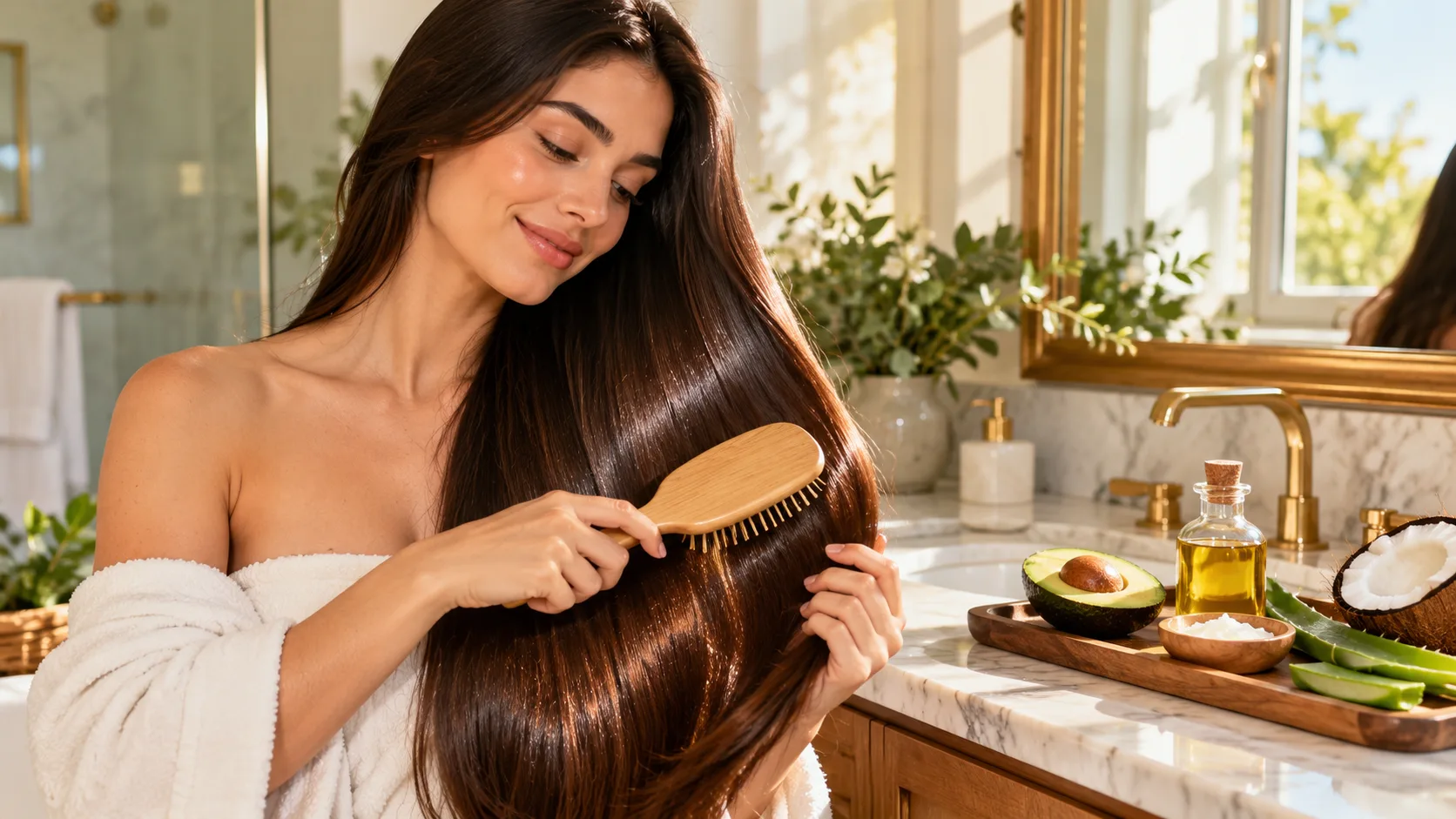
Shiny hair often reflects light beautifully, giving it a smooth, vibrant, and well-conditioned appearance. However, everyday activities such as frequent washing, heat styling, harsh brushing, and environmental exposure can leave hair looking dull or feeling rough. The good news is that you do not always need expensive salon treatments or complicated beauty routines to improve your hair’s natural shine.
Learning how to make hair look shiny naturally starts with understanding your hair type and developing gentle hair care habits. Simple steps like proper conditioning, careful drying, using suitable natural oils, and protecting hair from unnecessary damage can improve its appearance. This guide explores practical ways to make your hair appear smoother, softer, and shinier while maintaining a comfortable everyday routine.
Why Does Hair Look Dull Instead of Shiny?
Hair naturally reflects light through its outer protective layer, known as the cuticle. When the cuticle lies relatively flat and smooth, light reflects more evenly across the hair surface, creating a shinier appearance. When strands become rough, tangled, or damaged, light scatters in different directions, which can make hair appear less glossy.
Several factors can affect natural hair shine, including environmental conditions, chemical treatments, and everyday styling habits. Frequent heat exposure, aggressive brushing, and unsuitable cleansing products may increase surface roughness over time. Product buildup and mineral deposits from hard water can also leave hair feeling coated or looking less reflective.
Hair texture influences how light reflects from individual strands, meaning different hair types naturally display different levels of visible shine. Straight hair often reflects light more uniformly, while curly and coily hair may reflect it differently because of its shape. Less visible shine does not mean your hair is unhealthy or needs to be changed.
Wash Your Hair Gently to Maintain Natural Shine
Proper washing is an important part of maintaining manageable hair because it removes excess oil, dirt, and product residue. However, cleansing too aggressively can leave some hair types feeling dry or rough. Choosing a suitable shampoo and washing according to your scalp’s needs can help maintain cleanliness without unnecessary irritation.
Apply shampoo primarily to the scalp, where oil and buildup usually accumulate. Gently massage the cleanser using your fingertips rather than scratching with your nails or rubbing the hair lengths aggressively. As you rinse, the shampoo can move through the strands and remove accumulated residue without excessive handling.
The ideal washing frequency depends on scalp oil production, hair texture, styling habits, and personal comfort. Some people need frequent cleansing, while others find washing less often more suitable. Instead of following a rigid schedule, pay attention to how your scalp feels and whether your hair becomes greasy, uncomfortable, or difficult to manage.
Use Conditioner to Make Hair Look Smoother and Shinier
Conditioner plays an important role in improving the appearance of hair because it reduces friction and helps smooth the hair surface. Conditioning ingredients can make strands easier to detangle while improving softness and manageability. Regular use after shampooing may also reduce the rough feeling associated with dryness and everyday grooming.
Choose a conditioner that matches your hair’s thickness, texture, and conditioning needs. Lightweight formulas may feel comfortable on fine hair, while richer conditioners can benefit strands that require additional softness. Apply the product mainly to the mid-lengths and ends unless the manufacturer recommends a different application method.
Leave the conditioner on for the recommended period before rinsing thoroughly with comfortably warm water. Avoid aggressive rubbing when distributing the product, particularly if your hair tangles easily. A suitable conditioner can support a smoother appearance, although it cannot permanently reverse structural damage caused by bleaching or excessive heat.
Apply Natural Hair Oils for Extra Shine
Natural oils can improve the appearance of shine by lubricating strands and smoothing areas that feel rough. Coconut oil, argan oil, and jojoba oil are commonly used in hair care products for their conditioning properties. However, each oil behaves differently, and the best option depends on how your hair responds.
Coconut oil is often used as a pre-shampoo treatment because it can penetrate the hair shaft and help reduce protein loss under certain conditions. Argan oil is popular in finishing products designed to improve smoothness and reduce the appearance of frizz. Jojoba oil may appeal to people who prefer a lighter conditioning texture.
Start with a small amount of oil and distribute it gently through the lengths and ends. Applying excessive oil can leave hair greasy, heavy, or difficult to cleanse. If your scalp is sensitive or prone to irritation, avoid unnecessary scalp oiling and choose products specifically suited to your needs.
Dry Your Hair Carefully to Reduce Frizz and Roughness
The way you dry your hair can influence how smooth and manageable it feels afterward. Aggressively rubbing wet hair with a rough towel may increase tangling and friction between strands. A gentler drying technique helps limit unnecessary stress, particularly when hair is already fragile or prone to breakage.
After washing, carefully squeeze excess water from the hair instead of twisting or pulling it forcefully. Use a soft towel or clean cotton T-shirt to absorb additional moisture through gentle pressing motions. This approach can reduce friction while making the drying process more comfortable for different hair textures.
Allowing your hair to dry naturally can reduce frequent exposure to styling heat, although prolonged wetness is not always ideal for every hair type. If you prefer using a hairdryer, choose comfortable heat settings and avoid concentrating hot air on one section. Gentle drying helps maintain manageability and supports a smoother finish.
Limit Heat Styling to Protect Your Hair’s Natural Shine
Frequent exposure to high styling temperatures can affect the hair cuticle and contribute to dryness, roughness, and breakage. Flat irons, curling tools, and hairdryers may cause damage when used excessively or incorrectly. Reducing unnecessary heat exposure is a practical way to help preserve the appearance and feel of hair.
When using heated styling tools, choose the lowest effective temperature suitable for your hair and the appliance. Apply a heat-protective product according to its instructions before styling. Avoid repeatedly passing hot tools over the same section, especially when strands already feel dry or fragile.
You can also experiment with comfortable heat-free styling methods that suit your hair texture and everyday routine. Loose braids, appropriate rollers, and gentle styling techniques may help arrange hair without frequent high temperatures. The goal is not to avoid every styling tool but to minimize practices that repeatedly damage the hair surface.
Avoid Harsh DIY Remedies That Can Make Hair Dull
Homemade hair treatments often attract attention because they use familiar ingredients found in kitchens and households. However, natural ingredients are not automatically safe or effective for the hair and scalp. Some popular remedies can cause irritation, unwanted residue, or dryness when applied without understanding their effects.
Lemon juice, baking soda, and strongly concentrated vinegar mixtures are sometimes promoted as ways to improve hair shine. These substances can be irritating or unsuitable for regular application, especially on sensitive or chemically treated hair. Their use is not necessary for achieving a smoother appearance through ordinary conditioning and gentle cleansing.
A simpler approach is to use well-formulated hair products containing suitable conditioning ingredients or oils. If you enjoy experimenting with a new treatment, follow reliable product instructions and test for potential sensitivity. Avoid applying unfamiliar mixtures to irritated skin, and discontinue anything that causes itching, redness, or discomfort.
Prevent Product Buildup and Keep Hair Feeling Fresh
Product buildup can make hair feel coated and reduce its natural movement, particularly when several styling products are layered repeatedly. Oils, creams, sprays, and conditioners may accumulate depending on their formulations and washing habits. This residue can affect how the hair looks and feels even when individual products are suitable.
If your hair becomes unusually heavy or difficult to style, review how much product you apply during each routine. Using smaller quantities and rinsing appropriately may help reduce buildup without introducing additional treatments. Some people occasionally benefit from a suitable clarifying shampoo, although frequent use may leave certain hair types feeling dry.
Hard water can also contribute mineral deposits that affect hair feel and manageability in some households. A shampoo formulated to address mineral buildup may be helpful when this is a recurring concern. However, avoid assuming every change in hair shine comes from buildup because dryness, damage, and product compatibility can produce similar experiences.
Protect Your Hair From Sun, Swimming, and Environmental Exposure
Outdoor conditions can influence hair manageability because sunlight, wind, and environmental exposure place additional demands on the strands. Extended ultraviolet exposure can contribute to changes in hair color and protein structure. Protective habits may help reduce unnecessary damage, particularly for people who spend considerable time outdoors.
Wearing a comfortable hat or scarf during extended periods of strong sunlight can help limit direct exposure. Gentle protective hairstyles may also reduce excessive tangling caused by windy conditions. Choose arrangements that do not pull tightly on the scalp, especially when you will be wearing them for several hours.
Swimming can introduce additional challenges because pool chemicals and saltwater may leave hair feeling rough or tangled. Rinsing your hair with fresh water after swimming and using a suitable conditioner can improve manageability. If you swim regularly, consider a comfortable swim cap and a cleansing routine appropriate for your hair type.
Support Hair Health With Balanced Nutrition and Daily Habits
Hair growth and normal hair structure depend on biological processes supported by adequate nutrition and general health. Protein, iron, zinc, and other essential nutrients contribute to normal bodily functions, including those involved in producing hair. Eating a balanced variety of foods helps support these processes without relying on unnecessary beauty supplements.
Meals containing appropriate sources of protein, fruits, vegetables, whole grains, and healthy fats can contribute to overall nutritional well-being. Nutritional supplements are not automatically beneficial for hair shine unless there is an identified deficiency or other medical reason. Excessive intake of certain nutrients can also cause unwanted effects.
Adequate sleep and comfortable daily routines support general well-being, although they do not guarantee a particular hair appearance. If you notice persistent shedding, significant breakage, or scalp symptoms, professional evaluation may be useful. These concerns can have causes that ordinary conditioning products or dietary changes alone cannot resolve.
Adjust Your Shine Routine for Different Hair Types
Fine hair often benefits from lightweight conditioning products that improve smoothness without making the strands feel weighed down. Use small amounts of leave-in conditioner or finishing oil, concentrating on areas prone to tangling. If the hair becomes flat or coated, reduce the quantity rather than assuming additional products will improve shine.
Curly and coily hair can benefit from conditioning techniques that support detangling and reduce friction between strands. Applying a suitable leave-in conditioner to damp hair may improve softness and make styling more comfortable. Visible shine varies naturally across curl patterns, so focus on how your hair feels and behaves rather than comparing its reflection with straighter textures.
Color-treated and chemically processed hair may require additional conditioning because certain treatments affect the cuticle and internal hair structure. Gentle cleansing, regular conditioning, and reduced heat exposure can help maintain manageability. Choose products compatible with your treatment and remember that no cosmetic product can completely restore every form of existing damage.
Build a Simple Weekly Routine for Naturally Shiny Hair
A practical hair care routine should be easy to maintain and suited to your usual washing schedule. Begin with an appropriate shampoo, follow with conditioner, and use a small amount of leave-in product when needed. Consistency makes it easier to notice which steps improve softness and which products may be unnecessary.
Once a week, you may choose to use a suitable moisturizing hair mask or pre-shampoo oil treatment if your hair benefits from additional conditioning. Follow the recommended application time and avoid layering several intensive treatments during every wash. A modest routine is often easier to evaluate than frequently introducing multiple new products.
Review how your hair responds as seasons, styling habits, and everyday activities change. You may prefer lighter products during humid weather and additional conditioning when strands feel dry. The best approach is flexible, comfortable, and focused on reducing unnecessary damage rather than trying to achieve a particular level of shine every day.
Conclusion
Learning how to make hair look shiny naturally involves understanding how conditioning, gentle handling, and everyday care affect the hair surface. Smooth, well-conditioned strands often reflect light more evenly, creating a glossy appearance. Simple practices such as suitable shampooing, regular conditioning, and careful drying can support these results without complicated treatments.
Natural oils, lightweight leave-in conditioners, and occasional hair masks may provide additional conditioning when used appropriately. Protecting hair from excessive heat, aggressive brushing, and environmental damage can also help maintain softness. However, the ideal routine depends on individual hair texture, scalp needs, and product preferences.
Hair naturally varies in texture, shape, and visible shine, and these differences do not determine its health or quality. Focus on choosing products that make your hair comfortable, manageable, and easy to care for. With consistent and gentle habits, you can support a smoother appearance while respecting your hair’s natural characteristics.
Frequently Asked Questions (FAQs)
How can I make my hair shiny naturally at home?
Use a suitable shampoo and conditioner, dry your hair gently, and reduce excessive heat styling. A small amount of appropriate hair oil or leave-in conditioner may also improve smoothness and visible shine.
Which natural oil is best for shiny hair?
Argan, coconut, and jojoba oils are commonly used for hair conditioning. Argan oil may suit lightweight finishing, while coconut oil is often used before shampooing. The best choice depends on your hair’s needs.
Does washing hair with cold water make it shinier?
There is limited evidence that cold water alone significantly improves hair shine. Using a suitable conditioner, rinsing thoroughly, and reducing unnecessary friction are generally more reliable ways to support smoothness.
How often should I oil my hair for natural shine?
Once a week is a reasonable starting point for a pre-shampoo oil treatment, although frequency varies. Fine hair may need less, while dry strands may benefit from additional conditioning when appropriate.
Can dull hair become shiny again naturally?
Hair that looks dull because of dryness or buildup may appear shinier after suitable cleansing and conditioning. However, severely damaged hair cannot always regain its original structure through home care alone.

