

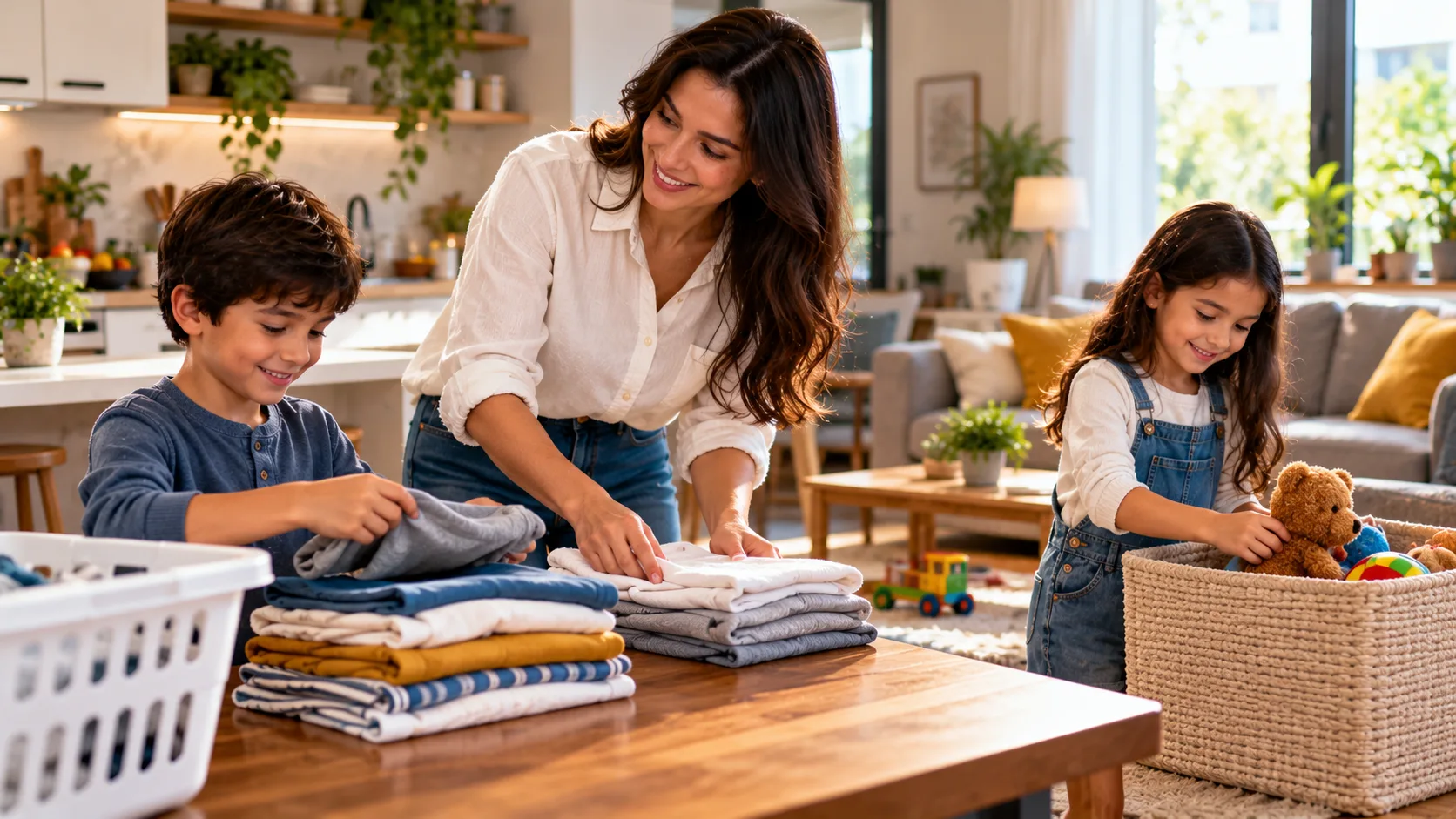
Teaching kids responsibility at home is an important part of helping them become confident, independent, and thoughtful individuals. Children learn responsibility through everyday experiences, including completing small household tasks, caring for personal belongings, and understanding how their actions affect others. These lessons help them develop practical life skills that become increasingly valuable as they grow older.
Responsibility does not develop overnight, and children need guidance, patience, and opportunities to practice. Parents can encourage responsible behavior by setting realistic expectations, establishing consistent routines, and recognizing genuine effort. Even simple activities, such as putting toys away or preparing a school bag, can build a stronger sense of ownership.
Understanding how to teach kids responsibility at home helps parents create a positive learning environment without relying on constant reminders or punishment. This guide explores practical parenting strategies, age-appropriate chores, daily routines, and ways to encourage children to become more dependable while respecting their developmental needs.
Why Teaching Kids Responsibility at Home Matters
Responsibility helps children understand that their actions and decisions can affect themselves and the people around them. When children participate in household activities, they begin recognizing the importance of cooperation and shared effort. These experiences introduce important life skills while helping children understand that maintaining a comfortable home involves contributions from different family members.
Learning responsibility also supports independence and confidence as children discover what they can accomplish. Completing manageable tasks gives them opportunities to practice planning, problem-solving, and persistence. Over time, these experiences can strengthen their ability to manage personal belongings, organize everyday activities, and approach unfamiliar responsibilities with greater confidence.
Teaching responsibility is not about making children behave like adults or expecting perfect results. It involves helping them develop useful habits at a pace appropriate for their age and abilities. Parents who combine clear expectations with encouragement can create a supportive environment where children gradually become more capable and dependable.
Start With Simple and Age-Appropriate Responsibilities
One of the most effective ways to teach kids responsibility is to introduce tasks they can realistically complete. Young children may begin by putting toys into baskets, placing clothes in a laundry hamper, or helping arrange napkins. These manageable activities allow them to experience responsibility without becoming overwhelmed by complicated instructions or unrealistic expectations.
As children grow, parents can gradually introduce more detailed responsibilities that require additional planning and attention. School-age children may help organize their study materials, sort clean laundry, or prepare simple snacks with appropriate supervision. Teenagers can take on more independent tasks, such as managing personal schedules or helping plan household meals.
Every child develops at a different pace, so responsibilities should reflect individual abilities rather than age alone. Parents may need to demonstrate tasks several times before children feel comfortable completing them independently. Starting small and increasing expectations gradually makes responsibility feel achievable instead of intimidating or unnecessarily stressful.
Create a Consistent Daily Routine for Children
Daily routines provide structure and help children understand what is expected throughout the day. When responsibilities become part of familiar activities, children may find them easier to remember. Simple routines around waking up, preparing for school, completing homework, and getting ready for bed create natural opportunities to practice responsible behavior.
For example, a morning routine might include making the bed, getting dressed, and checking a school bag. An evening routine could involve putting belongings away, preparing clothes for the next day, and organizing study materials. Keeping these activities predictable reduces confusion and helps children recognize how everyday habits support family life.
Consistency is important, but routines should remain flexible enough to accommodate changing circumstances. Illness, school commitments, family activities, and unexpected events may require temporary adjustments. Parents can support children by using simple reminders, visual schedules, and positive guidance rather than expecting every routine to happen perfectly.
Give Kids Household Chores They Can Manage
Household chores offer practical opportunities for children to develop responsibility while contributing to family life. Activities such as dusting accessible surfaces, matching socks, watering plants, and organizing books can introduce useful skills. When chores are manageable and clearly explained, children can participate without feeling that household work is an unfair burden.
Parents should demonstrate how to complete new chores and explain why each task matters. For example, cleaning a dining table helps prepare a shared space for the next meal. Understanding the purpose behind household responsibilities can make children more willing to participate than simply receiving instructions without explanation.
Chores should also remain balanced with schoolwork, rest, recreation, and family time. Children need opportunities to play, socialize, and explore their interests alongside learning practical skills. Avoid using excessive household work as punishment, since responsibility is more meaningful when children associate it with cooperation rather than fear or resentment.
Teach Responsibility Through Personal Belongings
Caring for personal belongings is a simple way for children to practice responsibility every day. Toys, books, school supplies, clothing, and sports equipment provide familiar opportunities to learn organization. Parents can encourage children to return items to designated places after using them, making cleanup a natural part of daily activities.
Creating accessible storage spaces makes it easier for children to manage their belongings independently. Low shelves, clearly labeled baskets, and simple drawer arrangements help younger children recognize where things belong. Older children may benefit from organizing their own school materials, personal items, and frequently used supplies according to their preferences.
Occasionally forgetting or misplacing belongings is a normal part of childhood development. Rather than immediately criticizing mistakes, parents can help children think about strategies for remembering important items. Repeated practice, supportive reminders, and manageable expectations help turn organization into a useful habit over time.
Be a Positive Role Model for Responsible Behavior
Children often learn important behaviors by observing the adults around them. When parents follow through on commitments, care for shared spaces, and acknowledge mistakes, they demonstrate what responsibility looks like in everyday life. These examples can be more meaningful than repeatedly explaining rules without showing how to apply them.
Parents can model responsibility through simple actions such as completing agreed tasks, arriving on time, and treating other people’s belongings respectfully. Explaining everyday decisions can also help children understand the reasoning behind responsible behavior. For instance, discussing why bills must be paid or appointments remembered introduces practical concepts without requiring children to manage adult concerns.
Being a responsible role model does not mean pretending to be perfect. Adults sometimes forget tasks, change plans, or make mistakes, and these moments can become useful learning opportunities. Acknowledging an error and explaining how to correct it shows children that responsibility includes honesty, flexibility, and willingness to improve.
Encourage Kids to Make Their Own Decisions
Giving children opportunities to make appropriate decisions helps them develop confidence and accountability. Young children can choose which toys to put away first or decide between two suitable outfits. These small choices introduce decision-making without placing excessive pressure on children to manage situations beyond their understanding or abilities.
Older children can gradually participate in more meaningful decisions involving homework schedules, household contributions, and personal organization. Parents can discuss available options, possible outcomes, and practical considerations before allowing children to choose. This approach encourages thoughtful decision-making while maintaining necessary boundaries and adult support.
Not every decision needs to have a perfect outcome for the experience to be valuable. When a choice creates a manageable problem, parents can help children reflect on what happened and consider alternatives. Providing guidance without controlling every detail allows children to develop judgment and become increasingly comfortable handling everyday responsibilities.
Set Clear Expectations and Explain the Rules
Children are more likely to understand responsibilities when expectations are specific and easy to follow. General instructions such as keeping a room clean may seem confusing to younger children. Explaining that toys belong in baskets, books go on shelves, and dirty clothes belong in the laundry hamper provides clearer guidance.
Family rules should be reasonable, consistent, and appropriate for each child’s developmental stage. Parents can explain why certain expectations matter, particularly when they involve safety, cooperation, or respect for others. Including children in suitable discussions about household routines may also help them feel involved in maintaining shared family responsibilities.
Avoid changing expectations frequently without providing an explanation, as this can create frustration or uncertainty. If responsibilities need to change, discuss the reasons and offer practical guidance. Clear communication helps children understand what they are expected to do while recognizing that family rules can adapt as circumstances change.
Use Positive Reinforcement to Build Good Habits
Positive reinforcement involves recognizing behaviors that parents want to encourage. When children complete a responsibility, acknowledging their effort can help them understand that their contribution matters. Specific feedback is often more useful than general praise because it identifies the actions that helped them complete a task successfully.
For example, parents might recognize that a child remembered to pack school supplies without being reminded. This type of encouragement highlights independence and consistent effort rather than focusing only on perfect results. Children may become more willing to practice responsibilities when they feel that their progress is noticed and appreciated.
Rewards can sometimes support motivation, but every household responsibility does not need to involve money or prizes. Encouragement, appreciation, and opportunities for greater independence can also be meaningful. The long-term goal is to help children understand the value of responsible behavior rather than expecting an external reward for every contribution.
Teach Kids to Learn From Their Mistakes
Mistakes provide valuable opportunities for children to understand responsibility and develop problem-solving skills. Forgetting homework materials, leaving toys outside, or overlooking a household task can happen during normal development. Instead of responding with immediate anger, parents can help children identify what went wrong and consider how to manage similar situations.
Natural consequences can support learning when they are safe, reasonable, and directly connected to a child’s actions. For example, a misplaced toy may require time spent searching for it before play can continue. However, consequences should never involve humiliation, withholding essential needs, or exposing children to unsafe situations.
Parents can guide reflection by asking what might help the child remember a responsibility next time. Creating reminders, adjusting routines, or practicing organizational skills may prevent repeated difficulties. This supportive approach teaches that responsibility includes recognizing mistakes and finding constructive ways to correct them.
Introduce Time Management Skills at Home
Time management is an important part of becoming responsible because children gradually learn to organize activities and meet expectations. Parents can introduce the concept through familiar tasks, including preparing for school, completing homework, and getting ready for bedtime. Simple schedules help children understand how different responsibilities fit into their daily routines.
Younger children may benefit from picture schedules or visual reminders that show the order of activities. Older children can begin using calendars, planners, or checklists to track assignments and personal commitments. These tools reduce reliance on memory alone while helping children develop practical planning habits.
Time management should not turn childhood into a rigid schedule filled with constant obligations. Children still need unstructured play, adequate sleep, and opportunities to relax. Parents can teach planning by helping children balance responsibilities with enjoyable activities, creating routines that support well-being rather than unnecessary pressure.
Make Responsibility a Family Team Effort
Responsibility becomes easier to understand when children recognize that family members contribute to shared household needs. Working together on simple activities demonstrates cooperation and mutual respect. Instead of presenting chores as isolated obligations, parents can explain how everyone benefits when common spaces remain organized and everyday tasks are completed.
Family activities such as setting the table, organizing a shared room, or preparing simple meals can encourage teamwork. Parents can assign tasks according to each person’s abilities and offer support when needed. Participating together also creates opportunities for conversation and practical learning without making responsibilities feel overly formal.
Family teamwork should be based on fairness rather than expecting every member to perform identical tasks. Younger children may require more assistance, while older children can manage more complex responsibilities. Recognizing different abilities helps create a supportive household environment where contributions are valued without comparing siblings or creating unnecessary competition.
Teach Financial Responsibility Through Simple Activities
Financial responsibility can begin with basic lessons about saving, spending, and making thoughtful choices. Young children may learn that money is used to purchase goods and that resources are limited. Everyday shopping experiences provide opportunities to discuss needs, preferences, and the importance of planning purchases.
Older children can practice financial decisions through a small allowance, savings goals, or supervised budgeting activities. Parents may help them compare prices, understand the difference between needs and wants, and plan for a future purchase. These exercises introduce practical money management skills without placing adult financial responsibilities on children.
Conversations about household money should remain age-appropriate and reassuring. Children do not need to carry responsibility for family financial difficulties or feel anxious about necessary expenses. The goal is to help them develop thoughtful spending habits, appreciation for resources, and confidence in making everyday financial decisions.
Help Children Develop Problem-Solving Skills
Problem-solving is closely connected to responsibility because children must learn how to respond when situations do not go as expected. Everyday challenges, such as organizing a crowded backpack or planning a school project, provide opportunities to practice. Parents can encourage children to identify problems and explore possible solutions before immediately taking over.
Asking open-ended questions can help children think through decisions and understand their options. Parents might invite them to consider what supplies are needed or how a task could be divided into smaller steps. This approach supports independent thinking while allowing adults to provide guidance when challenges become too difficult.
Some problems require direct adult involvement, particularly when safety, health, or serious emotional concerns are involved. Responsible parenting includes recognizing when children need assistance rather than expecting complete independence. By gradually transferring manageable decisions, parents can strengthen problem-solving abilities without placing unrealistic demands on their children.
Use a Chore Chart to Track Responsibilities
A chore chart can help children remember recurring household tasks and recognize their progress. Visual charts are particularly useful for younger children who benefit from seeing responsibilities clearly displayed. Parents can include activities such as tidying toys, organizing school supplies, or helping prepare shared spaces according to individual abilities.
Keep the chart simple enough for children to understand and maintain. A small collection of consistent tasks is usually easier to manage than a complicated list of daily obligations. Stickers, checkmarks, or completed-task symbols can provide a visual record of progress without requiring every activity to become a competition.
Review the chart periodically and adjust responsibilities as children develop new skills or household needs change. If a child repeatedly struggles with a particular task, consider whether the instructions are clear or the expectations appropriate. Chore charts should provide helpful structure rather than becoming tools for constant criticism.
Build Accountability Without Harsh Punishment
Accountability means understanding responsibilities and recognizing how personal actions affect other people. Children develop this understanding through guidance, consistent expectations, and opportunities to correct mistakes. Parents can encourage accountability by discussing situations calmly and explaining the relationship between actions, consequences, and respectful behavior.
When a child forgets an agreed task, begin by understanding what happened before deciding how to respond. The child may need clearer instructions, additional practice, or help managing competing demands. Collaborative problem-solving often teaches more useful skills than harsh punishment, particularly when difficulties result from age-related limitations.
Consequences should remain proportionate, respectful, and directly connected to the situation whenever possible. Physical punishment, humiliation, and threats can undermine trust and do not provide children with practical skills for improvement. Calm boundaries combined with encouragement create better opportunities for learning responsible behavior over time.
Encourage Independence While Providing Support
Independence develops gradually as children gain experience managing tasks and making decisions. Parents can support this process by allowing children to complete suitable responsibilities without unnecessary interference. Giving them enough time to try, make adjustments, and ask questions can help strengthen confidence in their developing abilities.
However, independence does not mean expecting children to manage every problem without assistance. Complex situations, safety concerns, and unfamiliar responsibilities may require direct guidance or supervision. Parents should remain available for support while gradually encouraging children to take greater ownership of tasks they can realistically handle.
Celebrating progress without demanding perfection helps children develop a healthier relationship with responsibility. Some days will be easier than others, especially during busy school periods or stressful family circumstances. A flexible, supportive approach allows children to build dependable habits while feeling secure and understood at home.
Conclusion
Teaching kids responsibility at home involves helping them develop practical habits, confidence, and an understanding of their role within the family. Simple chores, consistent routines, and opportunities for independent decision-making provide useful starting points. Children learn most effectively when expectations are realistic and parents demonstrate responsible behavior through their own actions.
Positive reinforcement, respectful boundaries, and opportunities to learn from mistakes can make responsibility a natural part of everyday family life. Parents should remember that children develop at different rates and may need repeated guidance before mastering new tasks. Patience and consistency are more valuable than expecting immediate perfection.
The goal of teaching responsibility is not to make children completely independent before they are ready. It is to help them gradually develop the skills needed to manage everyday situations, cooperate with others, and make thoughtful decisions. With encouragement, age-appropriate expectations, and ongoing support, children can become increasingly responsible and confident.
Frequently Asked Questions (FAQs)
At what age should children start learning responsibility?
Children can begin learning simple responsibilities during their toddler years through activities such as putting toys away. Expectations should gradually increase according to developmental abilities, individual needs, and appropriate adult supervision.
What are good household responsibilities for kids?
Suitable responsibilities include organizing toys, putting clothes away, setting the table, caring for personal belongings, and helping with simple household tasks. Assign activities according to each child’s abilities and safety needs.
How can I teach my child responsibility without punishment?
Use clear expectations, consistent routines, positive reinforcement, and supportive problem-solving. Help children understand mistakes and practice better choices rather than relying on threats, humiliation, or harsh disciplinary measures.
How do chores help children become responsible?
Age-appropriate chores help children practice organization, cooperation, time management, and task completion. Regular participation also teaches them that maintaining a household involves shared effort and consideration for other family members.
What should I do if my child refuses to complete chores?
Start by understanding why the child is struggling or resisting. Review whether the task is manageable, explain expectations clearly, offer appropriate choices, and maintain calm, consistent boundaries while providing necessary support.


[…] How to Teach Kids Responsibility at Home […]